Key Takeaways
- The review is based on six weeks of hands‑on testing conducted in mid‑2026.
- Monday CRM offers three pipeline view options: list, Kanban, and a Gantt‑style timeline.
- The contact and account relationship model does not support tracking multiple stakeholders, influence mapping, or mutual action plans.
- The pipeline lacks deal qualification frameworks, stage‑entry criteria enforcement, and deal‑level forecasting precision.
Monday.com built its reputation on project management — and that origin is never far from the surface when you use its CRM product. After six weeks of hands-on testing in mid-2026, the persistent impression is of a tool designed by people who think in boards and tasks, grafting CRM terminology onto a project management substrate and hoping sales teams will not notice. The visual design is polished. The onboarding is fast. And the limitations that matter — pipeline depth, outreach automation, AI capabilities, and reporting — reveal themselves steadily the moment a sales team tries to do serious sales work rather than just track deals on a board.
The Project Management Roots Show
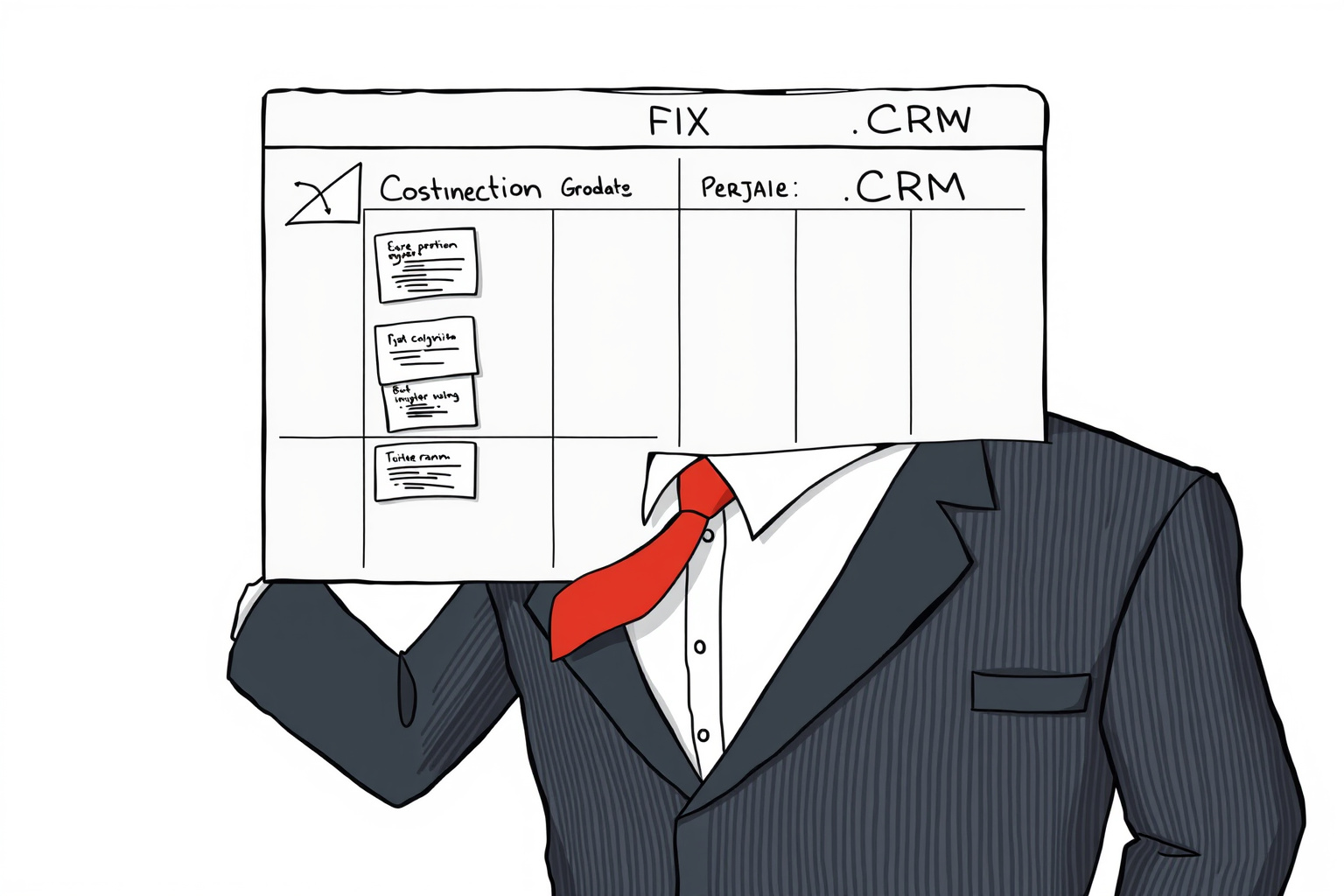
Monday CRM's core metaphor is a board: columns represent deal stages, cards represent deals, and movement between columns represents pipeline progress. This works intuitively for anyone familiar with Monday's project management product. It also imports the same limitations. A CRM built for complex sales motions needs to model relationships — between contacts, accounts, deal stakeholders, and influence hierarchies — in ways that a board-centric architecture handles awkwardly. Monday CRM's contact and account relationship model is shallow. Multiple stakeholders on an enterprise deal cannot be tracked meaningfully. There is no influence mapping, no concept of mutual action plans, and no way to distinguish an economic buyer from a technical champion within the same deal record.
For teams running simple transactional sales, this does not matter much. For teams running anything that resembles a real B2B sales cycle with multiple decision-makers, these gaps surface within weeks of adoption.
Visual Pipeline: Appealing Surface, Limited Depth
The Kanban pipeline board is Monday CRM's most frequently praised selling point, and the visual execution is genuinely well done. Drag-and-drop stage movement, color-coded deal fields, and multiple view options — list, Kanban, and a Gantt-style timeline — look impressive in a demo. The problem is that visual appeal and pipeline depth are not the same thing. Monday CRM's pipeline lacks the deal qualification frameworks, stage-entry criteria enforcement, and deal-level forecasting precision that sales leaders need to run a predictable revenue process. You can see your deals on a board. You cannot meaningfully interrogate why they are stuck, how long they have sat in each stage relative to historical benchmarks, or which deals carry genuine momentum and which are wishful thinking dressed up as pipeline.
HubSpot and Pipedrive — both purpose-built CRMs — offer significantly deeper deal-level analytics within the pipeline view itself. Monday CRM's pipeline is beautiful and analytically shallow.
Outreach Automation: The Most Glaring Gap
Monday CRM's automation builder handles trigger-action workflows: create a task when a deal changes stage, send a Slack notification when a lead goes stale, fire an email alert on specific field changes. These are project management automations wearing sales clothes. What they are not is outreach automation — the capacity to build, execute, and optimize multi-step sequences that send personalized emails to prospects based on deal context and behavioral signals.
Native email sequencing in Monday CRM exists in name only. You can send a templated email and set a follow-up reminder. There is no A/B testing, no deliverability controls, no reply detection that pauses a sequence when a prospect responds, and no AI-assisted content generation for sequence steps. Teams doing meaningful outbound email volume cannot run that motion inside Monday CRM without adding Outreach, Salesloft, or a comparable tool — which adds cost, complexity, and a second system of record that directly undermines Monday's pitch as a unified sales platform.
No AI-Driven Outreach or Personalization
In 2026, the CRM market has divided into platforms that use AI to help reps generate and personalize outreach at scale, and platforms that do not. Monday CRM falls firmly in the second category. There is no AI-assisted email generation, no dynamic personalization based on deal or contact data, no AI-driven sequence suggestions, and no prospect research automation. Monday's automation layer is rule-based — if this, then that — not intelligence-based. For sales teams that compete against peers using AI-native outreach platforms, this is not a minor gap. It is a structural disadvantage that compounds over time as AI-native tools widen the productivity gap between the teams that use them and those that do not.
Reporting: Visually Pleasant, Analytically Weak
Monday's dashboards are easy to build and look polished in a demo. The underlying reporting engine lacks the depth that sales leadership actually needs. Funnel conversion analysis, cohort tracking of deal velocity, rep-level forecasting accuracy, and pipeline waterfall analysis all require workarounds or third-party tools. Salesforce's reporting layer operates in a completely different tier of analytical sophistication. HubSpot's standard reporting outperforms Monday's in every dimension that a VP of Sales or revenue operations team cares about. For any organization evaluating CRMs partly on analytics capability, Monday CRM's reporting is a disqualifying limitation at the moment budget is requested for a tool upgrade.
Enterprise Sales Motion: Not Supported
Monday CRM should not be on shortlists for enterprise sales teams. Multi-stakeholder deal management, procurement committee tracking, multi-year or multi-product deal structures, and the relationship intelligence required for complex enterprise cycles are all beyond what the platform can support. The Q2 2026 pricing restructure made this worse — teams that need reporting depth now pay more for a product that still falls short of purpose-built alternatives.
The Q2 2026 Pricing Change
Who Monday CRM Is Actually For
The honest answer is narrow. Monday CRM makes sense for teams already deeply embedded in Monday.com's project management product that want pipeline visibility on the same platform without configuring a separate CRM. The cross-functional visibility — a won deal triggering a project board in the PM suite — is a real workflow benefit that traditional CRM vendors cannot replicate. For founder-led teams or very early-stage startups that need to track a handful of deals and move fast, Monday CRM removes friction at a stage when friction is the primary enemy.
Outside those use cases, the limitations accumulate faster than the onboarding experience suggests they will. Teams with any meaningful outbound motion, any need for AI-assisted selling, any reporting requirements beyond basic dashboard widgets, or any enterprise complexity will find Monday CRM running out of road quickly — often right when the business is growing and needs the tool to scale with it.
Teams evaluating Monday CRM for serious sales use should look carefully at AI-native CRM platforms purpose-built for outreach and revenue automation rather than retrofitted from a project management base. For structured comparisons across platforms including AI-native alternatives that address the outreach automation and pipeline depth gaps Monday leaves open, visit CRM Compass.
Frequently Asked Questions
How long was the product tested for this review?
The reviewer tested Monday CRM for six weeks in mid‑2026.
What pipeline visualization options does Monday CRM provide?
Monday CRM provides list, Kanban, and Gantt‑style timeline views for pipeline visualization.
Can Monday CRM track multiple decision‑makers and influence relationships on an enterprise deal?
No, Monday CRM cannot meaningfully track multiple stakeholders, influence mapping, or distinguish roles such as economic buyer versus technical champion.
Does Monday CRM include built‑in deal qualification frameworks or forecasting precision?
No, the pipeline lacks deal qualification frameworks, stage‑entry criteria enforcement, and deal‑level forecasting precision.