Key Takeaways
- Joby Aviation acquired Resonant Sciences for $500 million, bringing $100 million in trailing revenue and access to classified U.S. government programs
- Joby raised roughly $1.6 billion in gross proceeds from its 2021 SPAC merger, yet the S4 eVTOL remains in certification three years later
- The prior Blade Air Mobility acquisition cost $125 million for a helicopter rideshare operation with 12 terminals generating $36 million in quarterly revenue
- Resonant co-founder J. Micah North will lead a new dedicated defense division with its own P&L, absorbing Joby's existing military programs including turbine-electric and hydrogen-electric aircraft development
Joby Aviation's $500 million acquisition of Resonant Sciences isn't just another defense diversion for an eVTOL developer burning through SPAC proceeds. It's the clearest signal yet that the company has accepted a hard truth its peers are still dancing around: commercial certification is a capital sinkhole, and defense revenue is the only bridge that doesn't require dilution.
The deal, disclosed in a Tuesday regulatory filing, brings Ohio-based Resonant Sciences — its radio frequency and sensor systems, its $100 million in trailing revenue, and critically, its access to classified U.S. government programs — under the Joby umbrella. Resonant co-founder and CEO J. Micah North will lead a new dedicated defense division that absorbs Joby's existing military projects: the turbine-electric and hydrogen-electric aircraft programs, and the autonomy stack the company has been quietly building.
For context, Joby went public in 2021 via a blank-check merger armed with roughly $1.6 billion in gross proceeds. Three years later, the S4 eVTOL remains in the certification grind. The FAA's G-1 issue paper process for powered-lift aircraft is iterative, opaque, and expensive. Type certification for a novel configuration like the S4's six-tiltrotor design was never going to be a two-year sprint. Joby's management knows this. The Blade Air Mobility acquisition last year — $125 million for a helicopter rideshare operation with 12 terminals and $36 million in quarterly revenue — was the first admission that the timeline had stretched beyond investor patience.
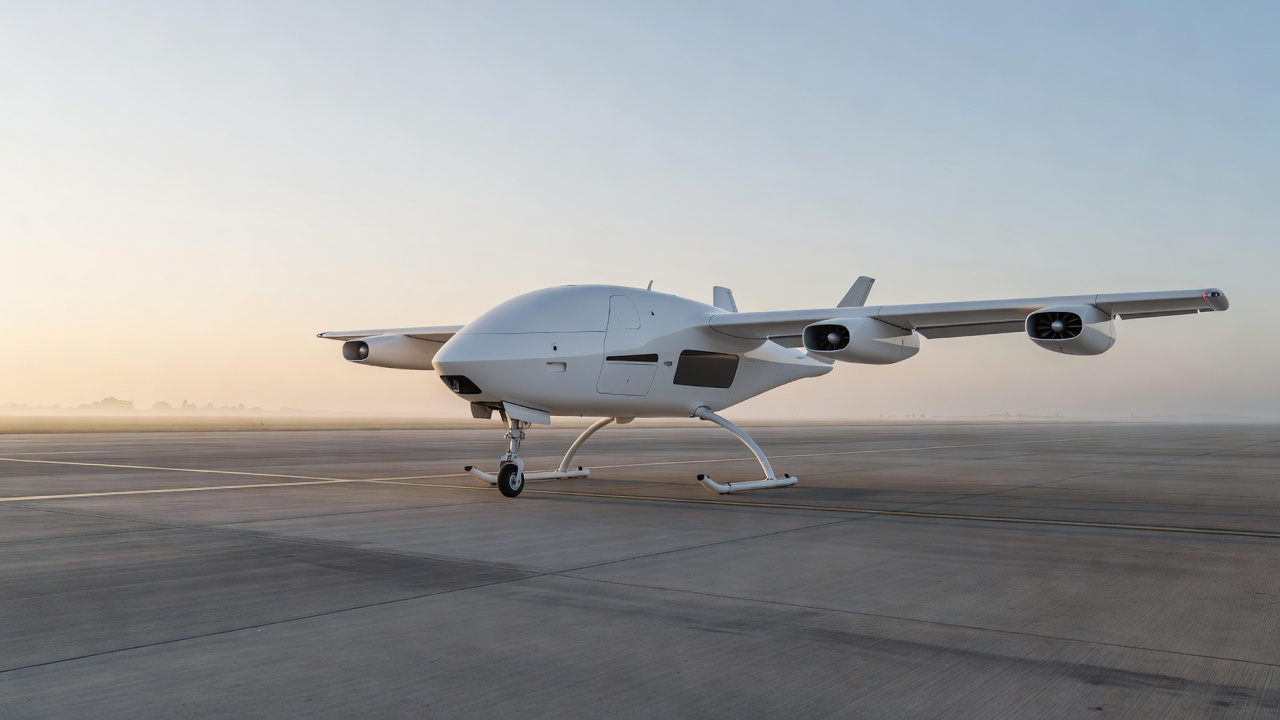
Resonant is a different animal entirely. Blade bought Joby terminal access and near-term cash flow. Resonant buys sovereign technology insertion points. Radio frequency sensing and electronic support measures don't just complement an eVTOL autonomy stack; they're the substrate for the Department of Defense's Replicator initiative and the broader autonomous collaborative platforms the Pentagon is actually funding at scale. The gas-turbine hybrid VTOL Joby is developing with L3Harris Technologies — based on the S4 airframe but powered for range and endurance — becomes a more credible platform when it carries Resonant's RF suite and connects to classified networks.
The Dual-Use Discipline
What separates this from the defense dabbling at Archer Aviation or Beta Technologies is structural discipline. Joby isn't running a skunkworks; it's segregating the defense business into its own division with its own P&L, led by a founder who already sells into classified programs. The commercial eVTOL program — certification, manufacturing stand-up, launch network — stays in the core company. The defense division feeds it technology (autonomy, hybrid propulsion validation, sensor fusion) and cash flow without distracting the Type Certificate effort.
This matters because the eVTOL competitive set is thinning. Vertical Aerospace and Lilium Jet are still burning venture cash on certification with no defense revenue floor. Wisk Aero's partnership with a major defense prime is looser — a memorandum of understanding, not an owned capability. Joby now owns the sensor layer, the autonomy stack, and a hybrid-propulsion airframe that can demonstrate 521-mile hydrogen-electric range. That's a sovereign payload platform, not an air taxi with a military paint job.
The SPAC Overhang
The unspoken driver remains the SPAC structure. Joby's public float trades at a fraction of its $6.6 billion post-merger valuation. Warrants are underwater. PIPE investors are long gone. The company's cash position — roughly $900 million at last report — looks healthy until you model the S4 certification burn rate against a 2026-2027 entry-into-service target. Every quarter without revenue widens the gap between cash trajectory and the cost of a production line in Marina, California.
Blade plugged $36 million per quarter. Resonant plugs $25 million per quarter and growing. Together they're a $240 million annualized revenue floor — still a rounding error against eVTOL certification spend, but enough to change the narrative from "pre-revenue speculative" to "defense prime with a commercial option." That distinction matters for the cost of capital when Joby inevitably returns to markets for the manufacturing facility raise.
The Technology Merge
The technical integration is where the bet pays off or fails. Joby's autonomy stack was built for urban airspace: detect-and-avoid, vertiport integration, passenger-mission logic. Resonant's RF and sensing tech operates in contested, denied, and degraded environments. Merging those codebases — sensor fusion across commercial and military electromagnetic spectra, autonomy that transitions from vertiport approach to terrain-following ingress — is non-trivial. North's division has to deliver integrated capability, not a slide deck.
If it works, Joby owns something rare: a dual-use aircraft platform where the defense variant funds the commercial variant's certification risk, and the commercial variant's production scale lowers the defense variant's unit cost. That's the Archer Aviation promise that never materialized. Joby's difference is acquisition discipline — buying revenue and classified access rather than chasing cost-share contracts.
What Comes Next
Watch for two signals. First, whether the defense division wins a program of record — a named DoD acquisition program with milestone funding — within 18 months. Resonant's classified access should accelerate this, but prime contractors guard their franchises viciously. Second, whether Joby uses the hybrid-propulsion S4 demonstrator to secure a Middle Tier Acquisition authority for the turbine-electric variant. That pathway — MTA, not FAA certification — is how the defense division delivers aircraft to warfighters while the commercial S4 grinds through Part 21.17.
The $500 million price tag — cash and stock — suggests Joby's board views Resonant as strategic infrastructure, not financial engineering. At roughly 5x trailing revenue for a classified-access sensor house with a founder-CEO staying on, it's a reasonable multiple in current defense tech M&A. The real cost is integration risk. Joby now has three businesses — air taxi certification, helicopter rideshare operations, and classified defense systems — running on one balance sheet. That's a management test North's division will define.
For the eVTOL sector, the message is unambiguous: the path to commercial service runs through defense revenue. Joby just bought the on-ramp.
Frequently Asked Questions
Why did Joby Aviation pursue a $500 million defense acquisition instead of focusing solely on commercial eVTOL certification?
Commercial certification for the S4's novel six-tiltrotor design has become a capital sinkhole with an iterative, opaque FAA G-1 process, while defense revenue provides a non-dilutive bridge to sustainability.
What strategic assets does Resonant Sciences bring beyond its $100 million in trailing revenue?
Resonant brings radio frequency and sensor systems plus access to classified U.S. government programs that serve as substrate for the Pentagon's Replicator initiative and autonomous collaborative platforms.
How does the Resonant acquisition differ from Joby's previous $125 million Blade Air Mobility purchase?
Blade bought terminal access and near-term cash flow from a helicopter rideshare operation, while Resonant buys sovereign technology insertion points and classified network connectivity for defense platforms.
What organizational structure is Joby implementing to manage its defense business separately from commercial efforts?
Joby is segregating defense into its own division with its own P&L led by Resonant CEO J. Micah North, absorbing existing military programs including the L3Harris Technologies gas-turbine hybrid VTOL development.